Patterns
Codependent Rage: When Not Being Needed Feels Like Annihilation
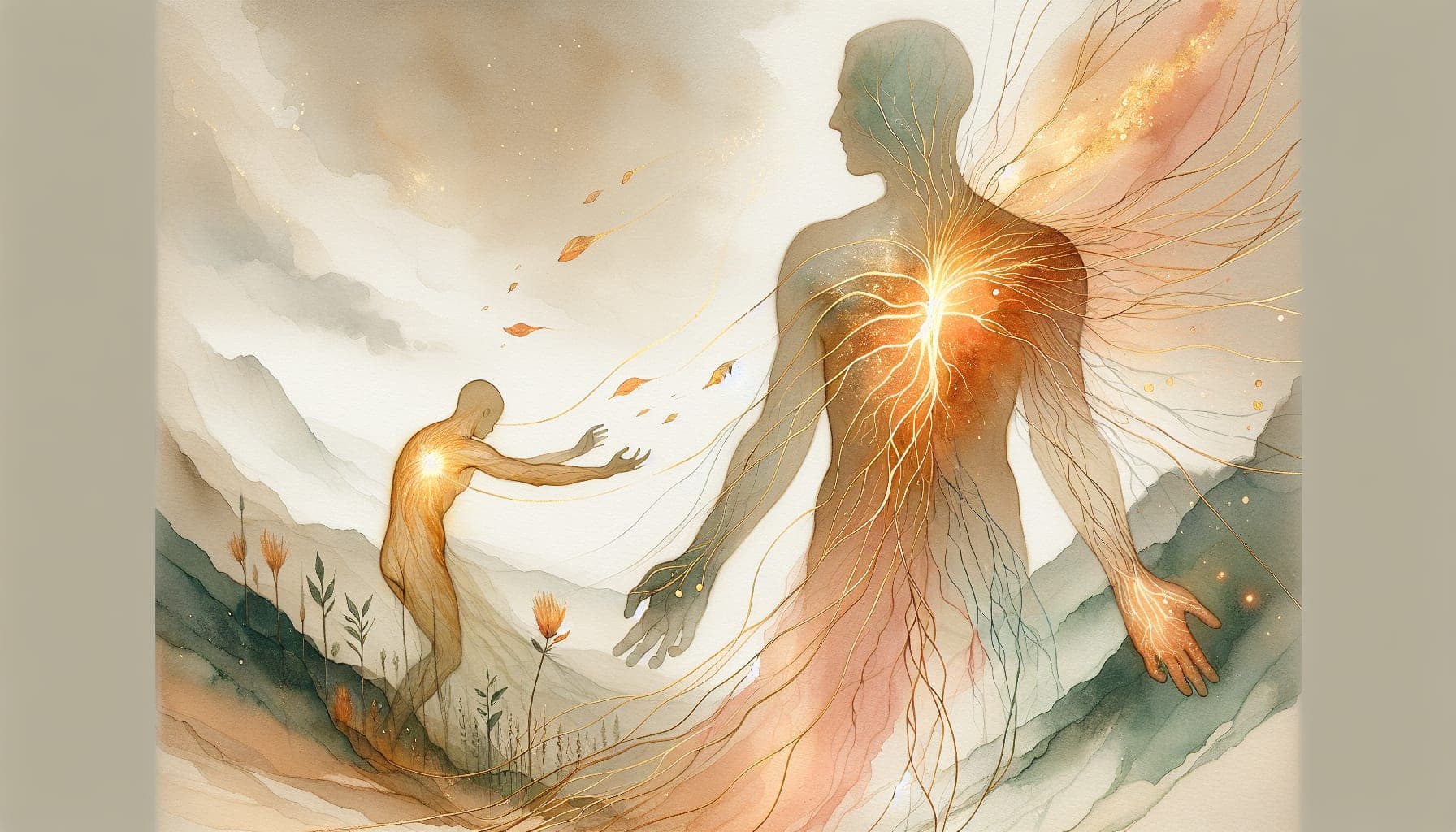
The Identity That Depends on Being Needed
You built yourself around being useful. Not in a small way — in the way that organized your entire sense of who you are. When someone you loved was struggling, you became the person who could fix it, absorb it, hold it together. And that role was not optional. It was the architecture of your self-worth.
For people with codependent attachment patterns, being needed is not just a preference — it is identity infrastructure. Research on codependency, shame-proneness, and childhood parentification traces this pattern to early family dynamics where the child learned that their value was conditional on emotional usefulness. You earned love by managing someone else's feelings. That lesson did not expire when you grew up. It became the operating system.
So when someone says — through words, through actions, through the slow withdrawal of needing you — "I do not need you for this anymore," something much deeper than disappointment happens. The ground shifts. And what rises up in response is not sadness. It is rage.
Why 'I Don't Need You' Feels Like Annihilation
This is the part that confuses people, including you. Why would someone else's independence make you furious? You should be happy for them. You should feel relieved. Instead, you feel like something is being ripped away — because it is. Not a relationship. An identity.
Attachment theory describes this through protest behavior — the urgent, sometimes aggressive response the attachment system produces when a bond feels threatened. In secure attachment, a partner's growing autonomy registers as positive. In codependent dynamics, it registers as abandonment. If your worth depends on being the one who holds things together, then someone not needing you to hold things together is an existential threat dressed as personal growth.
This is not about them growing
The rage is rarely about the other person becoming healthier or more independent. It is about what their independence means for you — that the role you have built your identity around is no longer required. The fury is the sound of an identity losing its foundation.
Research on rejection sensitivity shows that people who are primed for rejection — through early experiences of conditional love — perceive threat in situations that others would experience as neutral. Your partner learning to self-soothe is not rejecting you. But your nervous system reads it that way because the last time someone did not need you, you lost them.
The Rage Response — Where It Comes From
The anger that codependent people feel when their role is refused is not garden-variety frustration. It has a specific quality — hot, urgent, disproportionate to the trigger. Your partner asks a friend for advice instead of you, and the reaction inside your body is volcanic. They handle a crisis on their own, and instead of pride, you feel betrayed.
This is attachment-related hyperactivation — the anxious attachment system going into overdrive. When the bond feels threatened, the system does not simply register concern. It floods you with anger designed to pull the other person back into needing you. It is protest behavior at its most raw: if I rage hard enough, you will need me again.
The tragedy is that this rage almost always pushes people away. The very behavior designed to restore the bond accelerates its destruction. You lash out because you feel them pulling away, and the lashing out gives them a reason to pull away further.
The anger is real, but the story under it is old
When the fury hits, ask yourself: what am I actually afraid of right now? Usually the answer is not "they did something wrong." It is "if they do not need me, I do not know who I am." That fear is real. The anger is how it escapes.
The Suppression-Explosion Cycle
Codependent anger has a particular rhythm. It does not simmer at a steady, manageable temperature. It disappears — and then it detonates.
This happens because anger directly conflicts with the caretaker identity. You are supposed to be the patient one, the understanding one, the one who holds space and never needs space held for them. Expressing anger feels like breaking the contract that earns you love. So you suppress it. You swallow the resentment when they do not notice what you do for them. You smile through the frustration when your needs go unmet for the hundredth time. You tell yourself it is fine.
It is not fine. Research on emotion regulation strategies demonstrates that chronic suppression does not eliminate anger — it pressurizes it. The feelings do not dissolve. They accumulate in your body, in your jaw, in the tight knot between your shoulder blades, until some minor trigger — they forget to text back, they make a plan without consulting you — blows the lid off.
The explosion is not about the trigger
When the rage finally surfaces, it is never proportionate to the thing that triggered it. You are not yelling about the unwashed dishes or the unanswered text. You are yelling about every time you made yourself smaller, every need you swallowed, every moment you performed selflessness while quietly drowning. The trigger is the last straw. The explosion is the whole bale.
And then comes the guilt. The shame of having been angry — of having violated the caretaker contract — drives you right back into suppression. You apologize excessively, over-function harder, and the cycle resets. Suppress, accumulate, explode, feel shame, suppress again.
What the Research Says
The clinical literature on codependency and anger paints a consistent picture. Codependent individuals report significantly higher levels of unexpressed anger compared to non-codependent controls. Studies on codependency's relationship to shame-proneness and low self-esteem found that the core wound is not anger itself but the belief that expressing needs will result in abandonment — so anger, the emotion that most directly asserts a need, becomes the most dangerous feeling in the codependent's repertoire.
Attachment researchers have documented that anxiously attached individuals show heightened anger responses specifically in situations involving perceived partner unavailability. The anger is not a character flaw. It is the predictable output of an attachment system that learned, very early, that being needed was the only reliable path to being loved.
You are not a bad person for this
If you recognize yourself in these patterns, you are not discovering that you are secretly angry or secretly controlling. You are discovering that your attachment system developed a strategy for survival that worked in childhood and is now creating problems in adult relationships. The strategy can be changed. It is not who you are.
Breaking the Pattern
The way out is not suppressing the anger more effectively. You have already tried that, and it gave you the explosion cycle. The way out is learning that you can exist — and be loved — without being needed.
Name the identity, not just the feeling. When the rage hits, do not just say "I am angry." Say: "I am angry because their independence threatens the role I use to feel safe." Naming the mechanism takes away some of its power.
Separate your worth from your usefulness. This is the long work. It often requires therapy, specifically work on rebuilding self-worth outside the caretaker identity. You are not valuable because of what you provide. You are valuable because you exist. That sentence probably feels hollow right now. It will become true through practice, not through believing it on the first try.
Let people not need you. Practice this in small doses. Let your friend solve their own problem. Let your partner handle their own emotional moment. Notice the anxiety that rises — the urge to jump in, to fix, to be essential. Sit with it. It will not kill you, even though it feels like it might.
Express anger before it becomes rage. Learn to say "I feel hurt" before it becomes "I am furious." The fixer trap perpetuates itself partly because codependent people wait until they are past the point of calm expression. Smaller, earlier, more honest — that is the goal.
Grieve the identity you are letting go. Being the indispensable one felt like safety for a long time. Letting go of that role is a genuine loss, and it deserves to be grieved. You are not just changing a behavior. You are dismantling a survival system. That is brave, and it is painful, and it does not happen overnight.
The anger you feel when you are not needed is not a flaw. It is a signal — one of the clearest signals your psyche can send — that your sense of self has been outsourced to a role. Reclaiming it means learning to tolerate the terrifying, liberating truth: you are allowed to exist without earning it.
References
- Wells, M. C., Glickauf-Hughes, C., & Jones, R. (1999). Codependency: A grass roots construct's relationship to shame-proneness, low self-esteem, and childhood parentification. American Journal of Clinical Hypnosis, 42(2), 157–169. https://scholar.google.com/scholar?q=doi:10.1080%2F00029157.1999.10404189
- Mikulincer, M. & Shaver, P. R. (2005). Attachment theory and emotions in close relationships: Exploring the attachment-related dynamics of emotional reactions to relational events. Psychological Bulletin, 131(6), 817–857. https://scholar.google.com/scholar?q=doi:10.1037%2F0033-2909.131.6.817
- Downey, G. & Feldman, S. I. (1996). Implications of rejection sensitivity for intimate relationships. Journal of Personality and Social Psychology, 70(6), 1327–1343. https://doi.org/10.1037/0022-3514.70.6.1327
- Mikulincer, M. & Shaver, P. R. (2007). Boosting attachment security to promote mental health, prosocial values, and inter-group tolerance. Psychological Inquiry, 18(3), 139–156. https://doi.org/10.1080/10478400701512646
- Gross, J. J. (1998). The emerging field of emotion regulation: An integrative review. Review of General Psychology, 2(3), 271–299. https://doi.org/10.1037/1089-2680.2.3.271